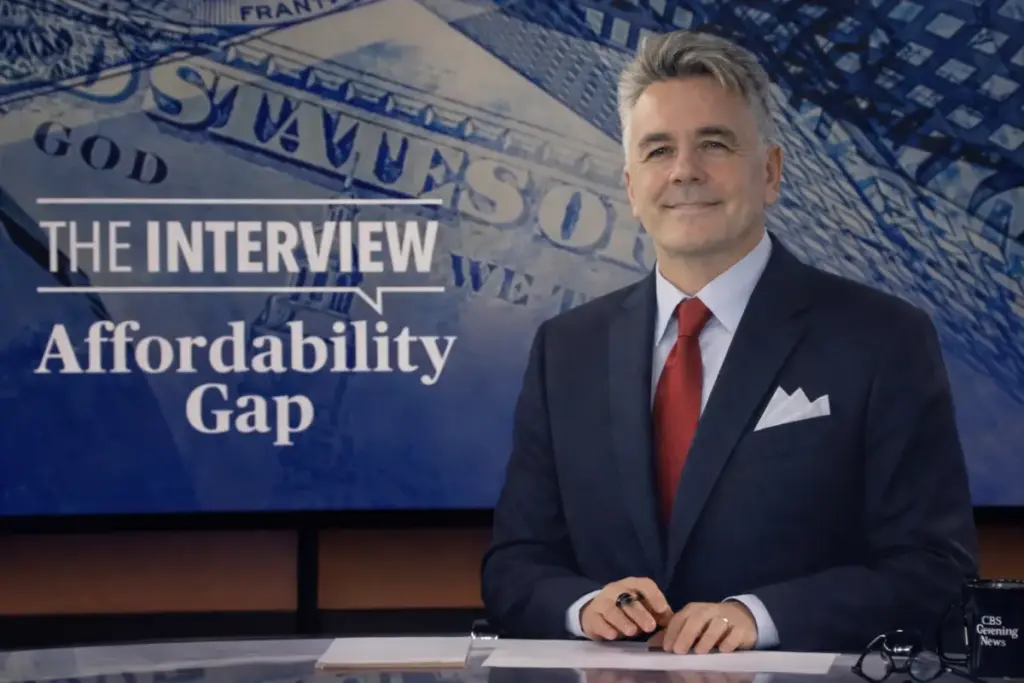
There is a concept that is spoken about quietly, almost in passing, while a fundamental shift of an era unfolds before our eyes every single day. It is called the accessibility gap. It is not just the difference between the rich and the poor. It is the difference between those who understand how the system works and those who merely participate in it. It is the difference between those who read the regulations and those who only feel them when they come knocking at their door.
For the past fifty years, the world has lived under what we can call a banking standard of debt. Money was created through credit. Credit created debt. Debt created dependency. Governments borrowed. Citizens borrowed. Companies borrowed. The economy expanded on the future promise that debt would be repaid with interest. That was the foundation of the modern financial system.
Few noticed that February 20, 2026 symbolically marked the end of one phase and the beginning of another. Not because a single law was passed that day that changed everything. But because on that day it became clear that decentralized finance was no longer a marginal experiment. It had become infrastructure operating in parallel with the banking system. The difference is that no one is talking about it loudly.
Why is no one talking about it?
Because the transition is not sudden. It is gradual. It is not introduced with a new calendar, but with new rules. Banks are not being shut down, but regulations are being introduced that redefine access to capital. Decentralized networks are not being banned, but entry and exit points are being regulated. Protocols are not being turned off, but who can use them and how is increasingly being controlled.
This is where the accessibility gap emerges. Those who understand the difference between bank money and digital assets, between custody and self-custody models, between centralized and decentralized protocols, have an advantage. Those who do not remain trapped in the old way of thinking.
In April, new decisions are expected from the U.S. administration regarding the regulation of decentralized finance. This is not a conspiracy theory. It is a natural continuation of a process that has been unfolding for years. Every system that becomes large enough eventually becomes regulated. The question is not whether it will happen. The question is how it will affect the average person.
Regulating decentralized finance does not necessarily mean banning it. It means defining the rules of the game. Who must register. Who must report transactions. Who must prove the origin of funds. Who bears responsibility if a protocol fails. Who has the right to access liquidity. Who is allowed to provide staking or lending services. These are technical questions, but behind them stand enormous economic consequences.
The problem is that all of this is happening far from public view. Working groups. Consultations with major financial institutions. Legal analyses. Meetings between regulators and technology companies. This is not secrecy in a cinematic sense. It is institutional silence. The documents exist, but only a small number of people read them. Decisions are being prepared, but an even smaller number truly understand them.
The vast majority remains trapped in media noise. Discussions revolve around prices, short-term spikes and crashes, emotionally charged headlines. Very few explain the essence. And the essence is that the architecture of money is changing.
If the way decentralized platforms interact with banks is regulated, if stricter user identification requirements are introduced, if taxes are redefined in relation to digital assets, then the accessibility of the system changes. Not everyone will lose everything. But many may lose access, flexibility, and speed they have become accustomed to.
At that point, the accessibility gap widens even further. Those who educated themselves, who understood how private keys work, multisig solutions, decentralized exchanges, cold storage, tax obligations, and legal frameworks, will adapt. Those who simply followed trends and relied on centralized services without understanding them may find themselves in trouble.
It is important to understand that decentralized finance is not a salvation in itself. It is a tool. Like any technology, it can be used responsibly or irresponsibly. It can increase freedom, but it can also increase risk. Regulation can protect users, but it can also limit innovation. The truth, as always, lies somewhere in between.
What is certain is that the financial landscape is changing. The banking standard of debt will not disappear overnight, but it is being complemented by a parallel system of digital assets and programmable money. Governments are trying to find a balance between control and innovation. Institutions are trying to maintain their influence. The technology sector is trying to preserve openness.
In this process, the greatest risk does not lie in secret plans, but in ignorance. Those who do not understand the changes will feel them the most. Those who study, read, follow regulatory developments, and understand the technology have a chance to bridge the accessibility gap.
The time we are living in is not a time of sudden revolutions. It is a time of quiet transitions. Changes happen in the footnotes of laws, in regulatory guidelines, in technical standards. While the majority debates price movements, the essence shifts within the rules.
That is why it is crucial not to view events through the lens of fear, but through the lens of knowledge. Education is the only way to reduce the gap. Not to escape the system, but to understand it. Not to lose everything, but to know what is truly owned and under what conditions.
The accessibility gap is not destiny. It is the consequence of an uneven distribution of information and knowledge. In a world transitioning from one financial paradigm to another, the greatest asset is not capital. The greatest asset is understanding.
Petar Miljić – Finansije za narod
👉 Znanjem protiv hajpa – uvijek sigurniji put!
🌐 Posjeti nas: https://kriptoentuzijasti.io
💬 Pridruži se zajednici: https://discord.gg/kriptoentuzijasti
🐦 Prati nas na X-u: https://twitter.com/k_entuzijasti
🧠💡 Ne zaboravite: budućnost se ne gradi kad svi već znaju za nju – već onda kad je vide samo rijetki.
🔥 Budućnost pripada onima koji misle dugoročno. 🔥
Jedno je sigurno – budućnost kripta neće biti dosadna!
Više edukativnih članaka možete pronaći na našoj web stranici kanalu i diskord platformi!
Ako vam se sviđa ono što čitate, podijelite članak na društvenim mrežama i pomozite nam širiti finacijsku slobodu i kripto znanje. Zajedno gradimo svijet financija i kripta!
#crypto #Bitcoin #KASPA #HBAR #XRP #RENDER #NEXO #BulRan2032